Postpartum Family Planning

Postpartum is not the time for "Trying to Whatever" or lax family planning. Postpartum is a time of nutritional depletion, physical recovery, and emotional changes, all things that effect subsequent pregnancies. Pregnancies spaced less than 18 months, and especially less than 6 months, are associated with higher rates of adverse outcomes (PMID: 16622143). It is important to consider these things and potentially avoid pregnancy accordingly.

Postpartum Return of Fertility
In non-breastfeeding, ovulation almost always occurs before the first bleed. This means that pregnancy can occur before the return of there menstrual cycle, only a few weeks postpartum.
Prolactin release during breastfeeding suppresses FSH release in the brain. FSH is responsible for triggering follicle development in the ovary, which is how breastfeeding and prolactin prevent ovulation. Because ovulation is suppressed, there will not be menstrual bleeds, also called lactational amenorrhea. In breastfeeding women, before 6 months postpartum, it’s more likely a bleed will occur before ovulation. After 6 months it’s more likely ovulation will occur before the first bleed (PMID: 2237993). It is of note that pumping does not have the same effect on delaying fertility as nursing. Prolactin release during pumping is variable causing inconsistent suppression of fertility.

Postpartum Birth Control
Often birth control is prescribed before leaving hospital without a discussion about options or side effects. If there is no plan to breastfeed, there are no restrictions on hormonal contraceptives postpartum. When breastfeeding, the recommended birth control options are a progestin only pill (mini pill) or an IUD. Both oral contraceptives and IUDs may be prescribed/inserted before leaving the hospital after birth, especially if there is no plan to breastfeed as fertility can return before the standard 6 week visit.
Birth control side effects are often not part of the discussion when prescribing, especially postpartum specific risks. The combination pill (only applicable for non-lactating) is linked with increased risk of depression postpartum (PMID: 40163119). The progestin pill (mini pill) is linked with lower risk of depression initially but higher depression risk later on postpartum (PMID: 40163119). IUDs acts as an inflammatory to the uterus, which is actively healing postpartum. Immediate IUD placement is also associated with higher rates of expulsion and perforation (PMID: 20966692, PMID: 34461075). Note that some IUDs also contain progestin, potentially also raising risk for depression later postpartum.
Lactational Amenorrhea
The Lactational Amenorrhea Method (LAM) uses the delay of ovulation to prevent pregnancy in the first 6 months of breastfeeding. LAM is highly studied around the world, with efficacy varying from 98-99.5% (PMID: 9556994). To effectively use LAM it is essential to meet the three criteria fully.
LAM Criteria
Nursing baby every 4 hours during the day and 6 hours at night
Baby is under 6 months old
No bleeding past 56 days
As soon as there is any bleeding postpartum, the LAM criteria no longer apply, as its likely ovulation will closely follow. Replacing nursing sessions with pumping also makes LAM no longer applicable, but the additional risk is low. Without return of menstruation, the risk of fertilization is less than 2% within the first 6 months postpartum when nursing for 70% of feedings (PMID: 26457855).
Ecological Breastfeeding
Many women experience delay of fertility beyond 6 months postpartum while breastfeeding. However this delay is not guaranteed, and beyond 6 months ovulation is more likely to occur before the first bleed. This means other methods are needed for pregnancy spacing, discussed in the next section. There is a study by Sheila Kippley outlining critera for delaying the return of fertility beyond 6 months postpartum, explained in her book Breastfeeding and Natural Child Spacing. The criteria for ecological breastfeeding are no pacifiers, no bottles used, no solid foods or non-breastmilk liquids for first 5 months, no breastmilk feeding schedule only baby’s cues, presence of night feedings, and presence of lying-down nursing for naps and night feedings. The average return of menstruation with ecological breastfeeding was 14.6 months. 93% experienced amenorrhea greater than six months and 56% greater than one year.
Fertility Awareness based Methods
Fertility Awareness based Methods (FAM) use a woman's biomarkers to identify periods of fertility and infertility and timer intercourse accordingly to meet family planning goals. To use FAM postpartum, especially when breastfeeding, we need a preceding sign of ovulation such as urinary hormones or cervical mucus. Sympto-thermal methods are not a good fit for postpartum, because temperature is a retrospective sign of ovulation and the mucus categories are often too strict and lead to long periods of unnecessary abstinence.

Marquette Method and Billings Ovulation Method both have postpartum studies with approximately 98% efficacy postpartum. Most other methods use the Billings rules postpartum, without the same nuance or instructor training for mucus analysis. Personally I have used both Billings and Maquette Methods Postpartum, and I teach Billings. They both have pros and cons, which I discuss in more detail in this post.
Summary
Pregnancy spacing postpartum had biological advantages to both mother and baby. Fertility can return quickly postpartum if not breastfeeding. Breastfeeding can delay the return of fertility, especially if LAM critera are met. There are natural options for pregnancy prevention postpartum, the best being Billings Ovulation and Marquette Method.
1
Searing the Beef
Sear beef fillets on high heat for 2 minutes per side to form a golden crust. Let it cool before proceeding to keep the beef tender.
1
Searing the Beef
Sear beef fillets on high heat for 2 minutes per side to form a golden crust. Let it cool before proceeding to keep the beef tender.
1
Searing the Beef
Sear beef fillets on high heat for 2 minutes per side to form a golden crust. Let it cool before proceeding to keep the beef tender.
1
Searing the Beef
Sear beef fillets on high heat for 2 minutes per side to form a golden crust. Let it cool before proceeding to keep the beef tender.
Notes


1
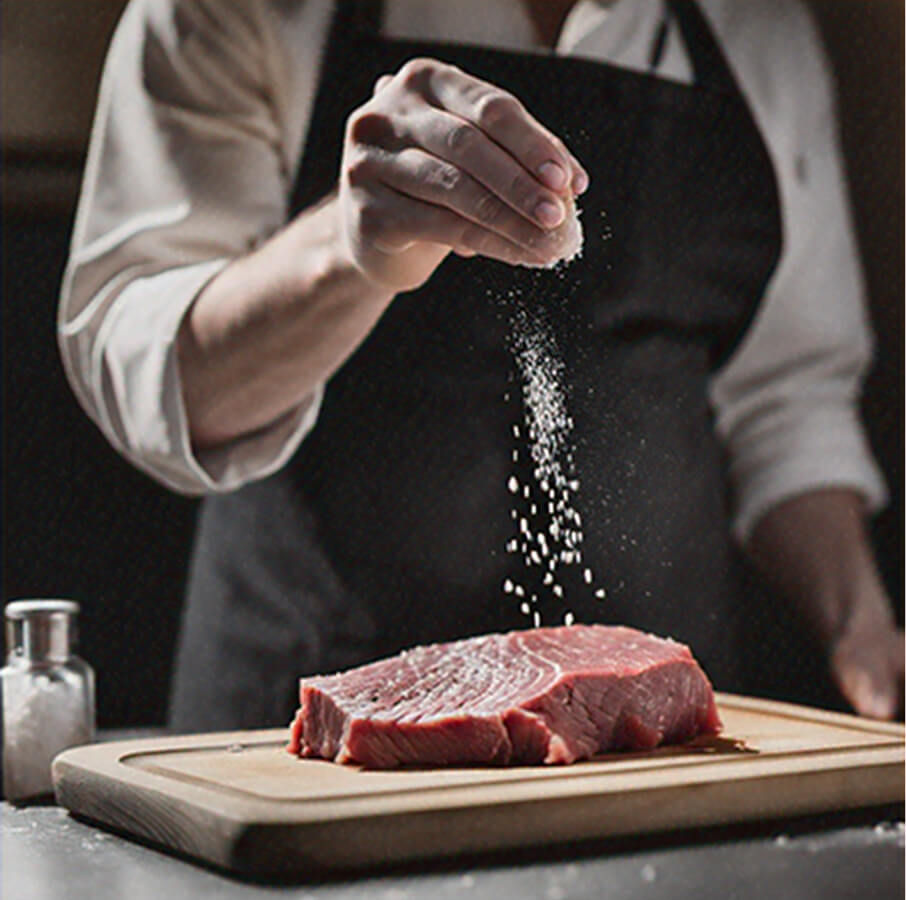
Season the good fresh beef fillets with salt and black pepper. Heat olive oil in a pan over high heat and sear the fillets for 2 minutes per side until it fully browned. Remove the beef from the pan and brush with a thin layer of mustard. Let it cool.
1
Season the good fresh beef fillets with salt and black pepper. Heat olive oil in a pan over high heat and sear the fillets for 2 minutes per side until it fully browned. Remove the beef from the pan and brush with a thin layer of mustard. Let it cool.
1
Season the good fresh beef fillets with salt and black pepper. Heat olive oil in a pan over high heat and sear the fillets for 2 minutes per side until it fully browned. Remove the beef from the pan and brush with a thin layer of mustard. Let it cool.
1
Season the good fresh beef fillets with salt and black pepper. Heat olive oil in a pan over high heat and sear the fillets for 2 minutes per side until it fully browned. Remove the beef from the pan and brush with a thin layer of mustard. Let it cool.
Instructions
Quality Fresh 2 beef fillets ( approximately 14 ounces each )
Quality Fresh 2 beef fillets ( approximately 14 ounces each )
Quality Fresh 2 beef fillets ( approximately 14 ounces each )
Beef Wellington
Beef Wellington
Fusion Wizard - Rooftop Eatery in Tokyo
Author Name
%20(1).jpg)
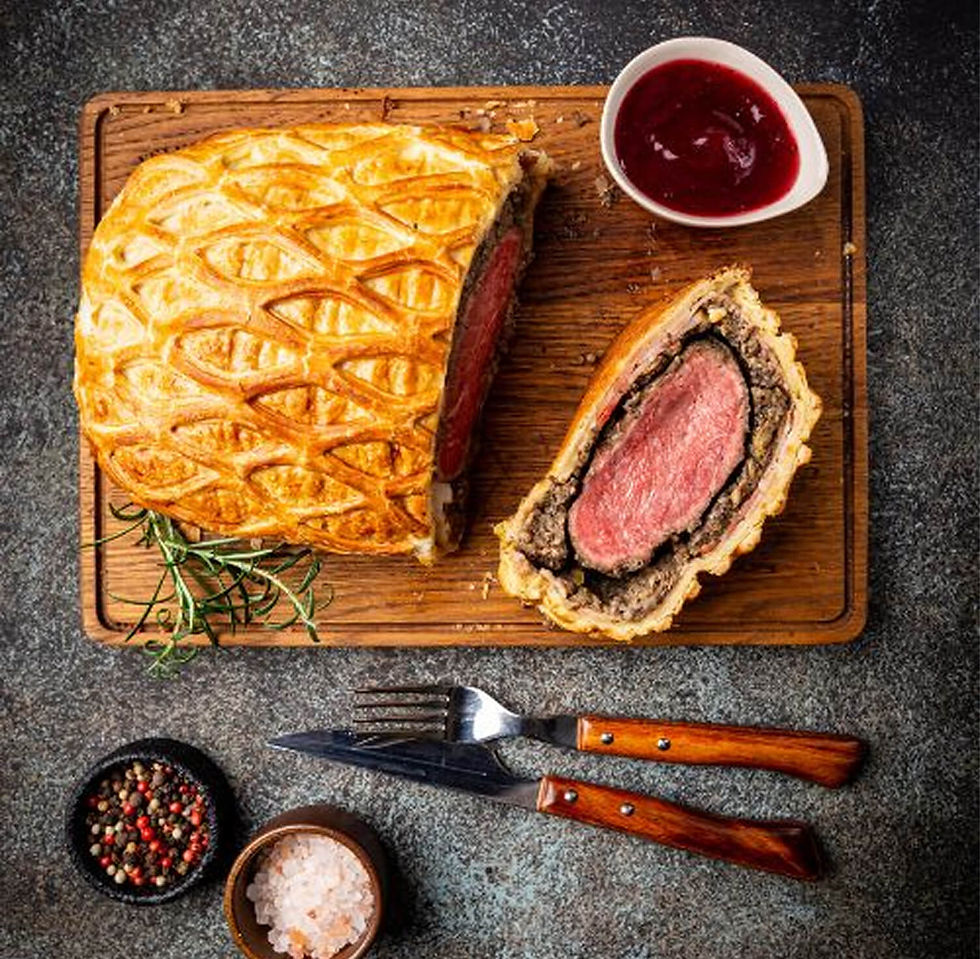
Beef Wellington is a luxurious dish featuring tender beef fillet coated with a flavorful mushroom duxelles and wrapped in a golden, flaky puff pastry. Perfect for special occasions, this recipe combines rich flavors and impressive presentation, making it the ultimate centerpiece for any celebration.
Servings :
4 Servings
Calories:
813 calories / Serve
Prep Time
30 mins
Prep Time
30 mins
Prep Time
30 mins
Prep Time
30 mins


Comments